Saturday, May 8, 2010

Light

Mention to most people that light is an element of art and they scratch their heads. Something so obvious as light is easily overlooked, making it almost a hidden tool. When it is highlighted in a piece, you know something special is at play but can't pinpoint what. When discussing light and artists my mind immediatly conjures up the images of Monet's Haystack paintings. Monet was one of the first painters to seriously consider light (and how light changes) when creating art. Others have since tried to manipulate the intangible nature of this element including James Turell, whose work borders civil-engineering or even astronomy a bit more than fine art, who creates what can be described as "installations" of light.
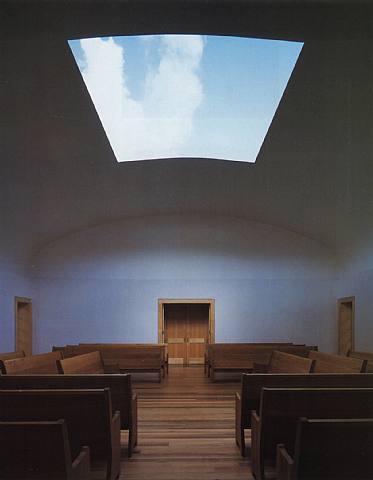
James Turrell, "Meeting House"

Friday, May 7, 2010

Space


Space is an interesting dimension of art, and one that can easily be overlooked due to the restrictive nature of most hung paintings. Sculpture, installation, and some rebellious painters use space to alter the viewer's sense of reality, making the otherwise distant feeling of art into something more tangible. Some of my favorite uses of space by artists include Timothy Hutchings whom I profiled in a previous post, the Chanschatz couple, whose paintings defy the typical framed approach for something altogether fresh, and Andy Goldsworthy. Goldsworthy's use of space is the most interesting because the spaces are usually outside, allowing those lucky enough to spot them a rare opportunity to interact with the art in nature.

Storm King Wall by Andy Goldsworthy

Artist Profile: Timothy Hutchings

Timothy Hutchings is a very interesting artist who specializes in installation pieces that consist of many sided shapes, usually made from cardboard and wood. He also produces several pieces that are based on games of the board, video, and war variety. My favorite piece of his (being a hugely unrepentant warhammer 40k nut) is his work titled "The World's Largest Wargaming Table". the manipulation of the area's space is very interesting. I also like that play is encouraged on the piece.

Tuesday, May 4, 2010

Line


Line is another important element of art. So many things are defined by lines that it becomes easy to overlook their importance. Shape, another element of art, cannot be achieved with out line. Line has a way of drawing the eye to certain parts of a piece of art much in the same way that color can achieve success. Some artists who I believe express the importance of line are Andy Goldsworthy and M.C. Escher.
this is a Goldsworthy piece to the left
and an Escher below.

Wednesday, April 28, 2010

Color

Color is of obvious importance in art. Color can mean many things. Some pieces of art use color brightly, dazzling the eye with lurrid hues. Others may only present a few colors, perhaps muted and earthy. Sometimes the most striking thing about a piece of art is an absence of color, or even an over-saturation of it. One style of art that I feel color is of the utmost importance to is Pointillism. Pointillism is a style where small dots of differing colors, which look like nothing in particular up close, becomes an image of something when viewed far away.

Saturday, February 27, 2010

The Renaissance through the eyes of an assassin...


Returning to their newest franchise, Ubisoft pulled out all the stops in recreating Renaissance Italy for Assassin's Creed 2. While one might think 'Hey Chad, why are you writing about a video-game on your art blog?', I can assure this game is chockful of art. From being able to purchase the most prominent paintings of the time period (1486 and prior), to palling around with Leonardo Divinci as he uses his designs and artistic talent to create new weapons for you and solve intense riddles. When not busily putting the kibash on the plans of the murderous Templars (the games secret society villians) you can actually explore the architecture of some of Italy's most amazing landmarks and buildings. A codex is constantly updated year by year throughout the game's time-line, relating to you new information about not only the most famous historical events of the period but also the art, philosophy, and architecture. Also not to mention, the game is beautiful. From its smooth animations and character design, to its amazing landscapes, Assassin's Creed 2 captures Renaissance Italy in a breathtaking manner. As an added plus every character in the game is steeped in actual history, from the Sforza's in Forli, all the way to Rodrigo Borgia, who would later rule as the tyrannical Pope Alexander the VI. Anyone who is interested in video games and art would do themselves a grave disservice missing this amazing piece of work.

Sometimes things just don't work...


Divinci and 'The Last supper' is a brilliant example of a genius inventing something that doesn't quite do the trick. Sforza (his patron) wanted the it to be a fresco, but Divinci was famous for his procrastination. When working with fresco, there is no procrastination. Leonardo decided to instead seal the wall with a formula of his own invention made with pitch and other material. He then painted onto the hardened surface. This worked fine and dandy for about 4 to 5 years. It became instantly apparent that Divinci's formula didn't work correctly as it began deteriorating at a rapid pace. Luckily his apprentice had completed two copies of the painting, saving as much detail as possible.

Wednesday, February 10, 2010

Masonry, History and Artisanship


I think that some of the most interesting architecture in history is that created by the Free Masons During the medieval age. The Freemasons were a large order of artisans, specializing in stone masonry. Aside from the obvious aesthetic beauty of their work during the crusades, I Think one of greatest virtues of their work is that stone masonry is an almost defunct art. Look through your local yellow pages under masonry and you'll be lucky to find any at all. Another interesting aspect of freemasonry was the fact that any man (sorry ladies; History has been very unkind to you) could apprentice with a stone mason and learn the art. As opposed to years of training and wealth that was required to learn painting, sculpting, or music, masonry work was so plentiful that the poor could receive training and perhaps become a master mason.
Enough talking Chad! Show us the work!

Ok! Here's some of my favorite examples of masonry! (pictures from www.hpdetective.com/)scotland

Roslyn Chapel: The Apprentice Pillar - A masonic tale of a master mason's apprentice surpassing him in skill. The master killed the apprentice, and so the masons executed the master and erected this pillar in honor of the apprentice and his masterful abilities. The master's face was carved into the opposite wall so he must always look upon the apprentice pillar.


Roslyn Chapel ceiling


Monday, January 25, 2010

My new blog for my Art Appreciation class!

Well here's my new blog that I'll be using to document my thoughts and impressions on Art Appreciation!